
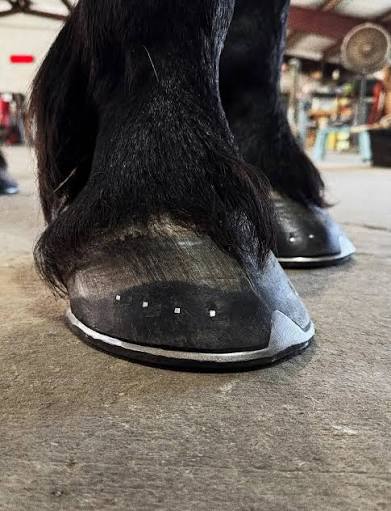
Why We Shoe: The Principles That Govern Every Farriery Decision
SCIENTIFIC ARTICLE · FARRIERY FUNDAMENTALSWhy We Shoe: The Principles That Govern Every Farriery DecisionFrom protection and traction to clinical reasoning and the barefoot debate — an evidence-based framework for the modern farrier Adapted from The Equine Foot: A Clinical Reference · Caldwell, Conroy & Madden |
Every time a farrier picks up a foot, a clinical decision is being made. Not a habit. Not a repetition of what was done six weeks ago. A decision — grounded in what the foot is showing, what the horse needs, and what the evidence actually supports. That decision starts with a question most farriers rarely ask explicitly: why are we shoeing this horse at all?
It sounds provocative, but it isn’t. The answer is the foundation of every sound farriery prescription. This article aims to lay out the framework that should underpin every shoeing decision: the four objectives, the concept of the management compromise, the mechanics of breakover, and what the barefoot evidence actually shows.
The Four Objectives of Shoeing
| 1 | ProtectionThe shoe protects hoof horn from wear that exceeds the rate of production. A working horse on hard or abrasive surfaces may wear several millimetres more per month than it produces. Without protection, the result is progressive capsule collapse, thinned soles, and compromised laminar attachment. |
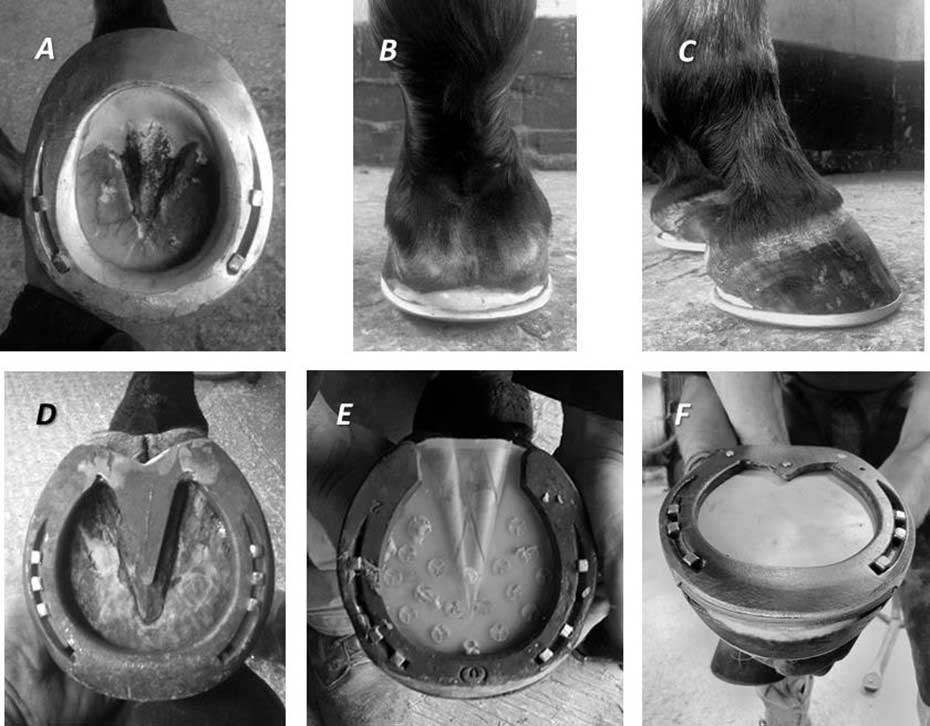
| 2 | SupportThe width and shape of the shoe web determines how load is shared across the bearing surface. A well-fitted shoe distributes forces over a greater contact area than the bare hoof on a hard surface, reducing peak pressure at any single point. Support may be passive — optimising normal load — or active, specifically designed to offload a compromised structure. |
| 3 | TractionThe bare hoof provides insufficient grip on wet grass or polished surfaces for safe performance. Shoes modify the metal-to-ground interface and can be further adjusted with studs or surface treatments. The evidence base for stud use, however, also demonstrates a measurable increase in rotational limb forces when grip is excessive — traction modification carries risk as well as benefit. |
| 4 | Therapeutic EffectThe therapeutic shoe redistributes load to support healing, reduce pain, or prevent further damage. This includes breakover manipulation, heel elevation, redistribution of solar load, and frog support. Therapeutic shoeing requires both a precise diagnosis and a clear understanding of what the shoe modification will achieve biomechanically. |
| “Every shoeing decision should be traceable to one or more of these four objectives. Where it cannot, the decision should be reconsidered.” |
The Ideal Foot — and the Management Compromise
The ‘ideal foot’ in farriery is a functional concept, not an aesthetic one. It describes the mechanical conditions under which the foot operates with minimal pathological stress: a straight and continuous hoof–pastern axis (HPA) in both the dorsopalmar and mediolateral planes, a palmar angle that supports the DDFT loading arc, medio-lateral symmetry at the bearing surface, and a breakover point that does not impose excessive lever force on the navicular apparatus.
Very few horses present a foot that meets all these criteria simultaneously. Conformation history, workload, previous shoeing, and discipline demands all combine to produce a clinical picture in which compromise is routine. The farrier’s task is not to achieve a theoretical ideal, but to move the foot toward functional balance as far as the horse’s biology and shoeing interval permit — without doing harm in the process.
| Clinical Caution Rapid correction of established imbalances is frequently more harmful than staged management. A severely underrun heel or broken-back HPA that has persisted for months will have generated adaptive changes in tendons, ligaments, and bone. Forcing rapid correction places sudden asymmetric load on structures that have compensated for the previous state. Stage corrections carefully. Document the baseline. Reassess at every cycle. |
Breakover: The Most Underestimated Variable in Farriery
Breakover is the phase of the stride in which the heel has left the ground and the foot pivots over the toe before swing phase begins. Its position relative to the centre of rotation of the DIP joint determines the length of the lever arm through which the DDFT must work at every step.
A long toe moves the breakover point distally, increasing this lever arm and therefore the work done by the DDFT and its check ligament at each stride. Controlled kinetic studies using tendon strain gauges have demonstrated that moving the breakover point palmarly measurably reduces peak DDFT loading force. The effect is mechanistically consistent with lever arm theory and is supported by replicated instrumented studies.
How Breakover Can Be Modified
Three principal modifications are available, each with a slightly different mechanical effect and appropriate clinical context:
▪ Squared toe: Reduces the lever arm without significantly altering the dorsal wall angle. Appropriate for horses with adequate toe length but DDFT or navicular loading concerns.
▪ Rolled/Rocker toe: Achieves a similar mechanical effect with a progressive contact profile. Better suited to horses that land flat or toe-first.
▪ Set-back shoe: The most aggressive form of breakover reduction, positioning the toe of the shoe palmarly beneath the toe. Primarily used in therapeutic contexts.
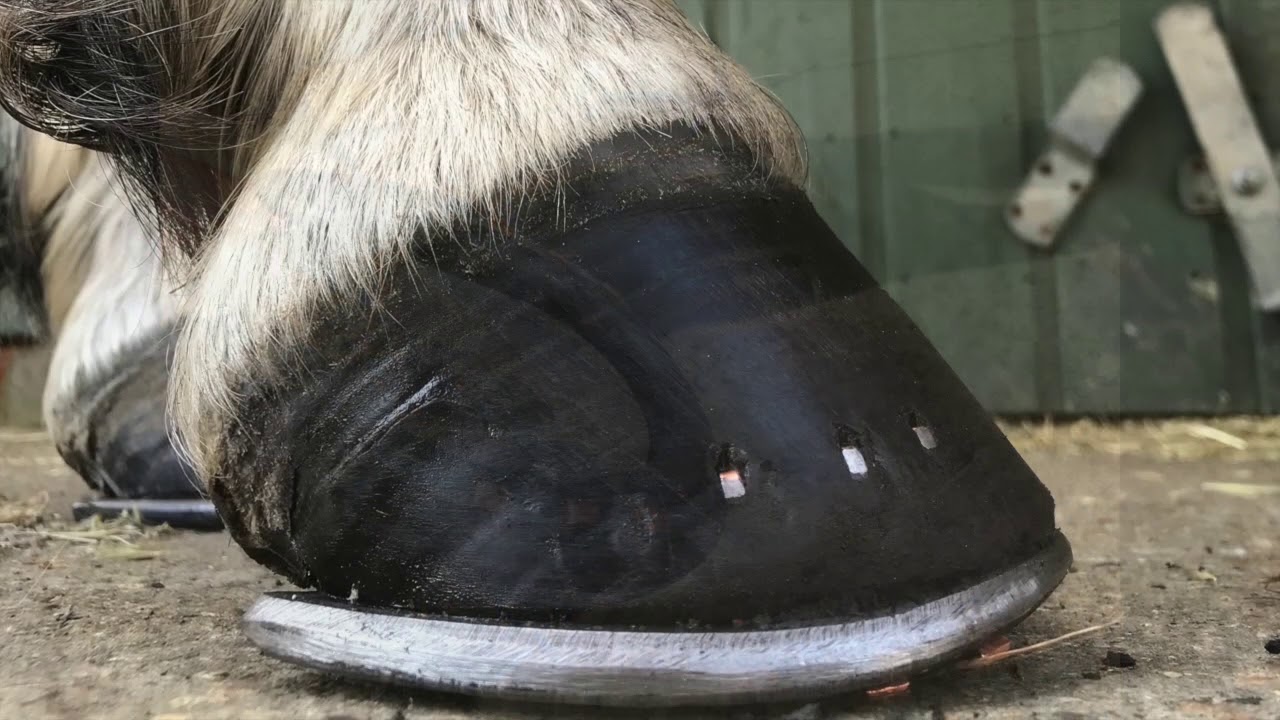
A roller motion / rocker toe shoe may be counterintuative on artificial arena surfaces.
Reading the Foot: From Assessment to Prescription
Assessment is the prerequisite of prescription. A structured shoeing prescription specifies: the trim modifications required; the shoe type and specification; the fitting approach; any surface treatments; and the shoeing interval. Every element should be traceable to a clinical finding. Where it is not, the element should be reconsidered.
| The Six Questions Every Shoeing Decision Should Answer 1. What does this foot show that is abnormal or suboptimal? 2. What is the most important finding to address in this cycle? 3. What are the risks of correction, and how can they be managed? 4. What shoe specification will achieve the stated objective? 5. What is the expected outcome, and over how many cycles? 6. What will I look for at the next visit to assess whether the intervention has been effective? |
Clinical assessment frequently generates conflicting findings — the horse with both a broken-back HPA and a thin sole; contracted heels alongside evidence of DDFT loading concern. Navigating these conflicts requires explicit prioritisation: address the finding most likely causing current dysfunction first, stage corrections to secondary findings across subsequent cycles, and document both the finding and the reasoning at every visit.
The shoeing record is not administrative paperwork. It is the clinical decision log that enables longitudinal management — the difference between managed progression and drift.
The Barefoot Debate: What the Literature Actually Shows
The barefoot–shod question deserves evidence-based examination rather than advocacy, and the current literature supports a more nuanced conclusion than either camp typically acknowledges.
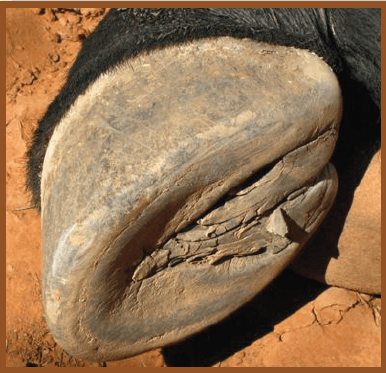
The mechanistic arguments for barefoot management are genuine. The unshod foot has continuous frog ground contact, associated with greater digital cushion development over time. The absence of a rigid shoe permits the natural hoof capsule deformation that contributes to the venous pump mechanism. Force plate studies have demonstrated measurable differences in hoof mechanism between shod and unshod horses.
The evidence that this translates into superior soundness outcomes is, however, inconsistent. Population-level studies of sport horse performance and injury rates have not consistently demonstrated a soundness advantage for barefoot management in horses in medium-to-high workloads on hard or abrasive surfaces. The principal limitation of the barefoot literature is that most studies compare populations with systematically different management profiles, making causal inference difficult.
| When Barefoot Management Is Appropriate The evidence most consistently supports barefoot management when a horse:
• Works exclusively on soft or grass surfaces • Has adequate horn quality and growth rate to sustain the work demand without pathological wear • Is managed with regular, skilled trimming to maintain functional balance • Does not have conditions requiring protection, support, or therapeutic modification
The decision to manage without shoes is not simply the absence of a decision to shoe. It is a positive clinical determination that the foot is adequate to its workload. |
The Bottom Line
Shoeing is a clinical intervention. The farrier who approaches every visit with a structured framework — who can state the problem they identified, the objective they set, and the method they chose — is practising at a professional standard. The farrier who cannot is relying on habit, and habit is not clinical judgement.
Protection, support, traction, therapeutic effect. Four objectives clearly understood. A management compromise, explicitly acknowledged and staged. A breakover decision, grounded in lever arm mechanics. A prescription, traceable to findings. A record, written down.
That is what evidence-based farriery looks like at the workface. It does not require a laboratory. It requires a framework, a habit of documentation, and the intellectual honesty to know whether a decision is grounded in evidence or in tradition.
Key References
- O’Grady SE, Poupard DA. Proper physiologic horseshoeing. Vet Clin North Am Equine Pract. 2003;19(2):333–51.
- Eliashar E, McGuigan MP, Wilson AM. Relationship of foot conformation and force applied to the navicular bone of sound horses at the trot. Equine Vet J. 2004;36(5):431–5.
- van Heel MC, van Weeren PR, Back W. Shoeing sound Warmblood horses with a rolled-toe optimises hoof-unrollment and lowers peak loading during breakover. Equine Vet J. 2006;38(3):258–62.
- Willemen MA, Savelberg HH, Barneveld A. The effect of orthopaedic shoeing on the force exerted by the DDFT on the navicular bone in horses. Equine Vet J. 1999;31(1):25–30.
- Hermans H, et al. Locomotor impact of barefoot versus shod management in riding horses: a systematic review. Vet J. 2019.
- van Heel MC, Barneveld A, van Weeren PR, Back W. Dynamic pressure measurements for the detailed study of hoof loading on different ground surfaces. Equine Vet J. 2004;36(6):507–11.