
What Your Horseshoe Is Actually Made Of — and Why It Matters
From steel metallurgy and surface treatments to glue-on technology, 3D-printed shoes, and the evidence-based management of juvenile limb deformities
Adapted from The Equine Foot: A Clinical Reference · Caldwell, Conroy & Madden
A horseshoe is not a generic metal ring. It is a precision clinical device whose mass, stiffness, hardness, surface treatment, and attachment system all determine how it changes the mechanical environment inside your horse’s foot. Every time a farrier selects a shoe, they are making a materials science decision — whether they think of it in those terms or not.
Most of the time, the decision is made on autopilot: steel for the working horse, aluminium for the performance horse, glue-on if there’s a problem with the wall. But the science behind each of these choices is considerably richer than the shorthand implies. This article walks through the material categories that define modern farriery—what each is made of, what it does, when it excels, and where it fails.
Steel: Why a Millennium of Dominance Is Still Justified
Steel has been the dominant horseshoe material for over a thousand years. The reason is not nostalgia. Its combination of tensile strength, workability, durability, and cost remains unmatched for the majority of clinical contexts.
The standard horseshoe is made from mild steel grade A-36 — approximately 0.25–0.29% carbon by weight. This is a deliberate choice. At forging temperature (around 1,260°C), A-36 is highly malleable, can be shaped to within ±1.5 mm of any prescription, and is ductile enough when cold to be adjusted in the field with a bending bar without fracturing. Higher carbon steels are harder and more wear-resistant, but they cannot be returned to a forge without destroying their temper. For handmade farriery, mild steel remains irreplaceable.
Hot forging additionally changes the microstructure of the steel in a clinically relevant way: it aligns the grain of the metal in the direction of shaping, producing better fatigue resistance than an equivalent rolled or machined section. For a shoe that will receive surface treatments like tungsten or borium and be subjected to repeated high-speed ground impact, that structural quality matters.
The Fullered Concave Shoe
The standard fullered concave shoe is the baseline. The groove machined into its ground surface — the fullering — does three things simultaneously: it seats the nail head below the ground contact plane (reducing nail wear and preventing the shoe from rocking on the nail head on hard surfaces); it adds grip on firm ground; and it reduces the shoe’s mass relative to a plain stamped shoe of the same web width. The concave upper surface lifts the sole away from ground contact, which matters significantly for flat-soled or thin-soled horses, and even more for horses whose shoes carry surface treatments.
Selecting a material means selecting a set of mechanical consequences for the digit. The farrier should be able to articulate what those consequences are.”
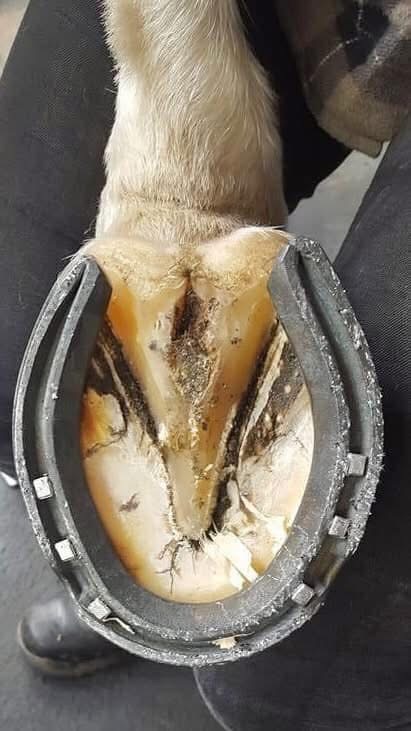
Fullered concave hind shoe hand made.
Surface Treatments: Tungsten, Borium, and Grip
The traction properties of a plain steel shoe on a wet grass surface or polished arena floor are often insufficient for safe athletic performance. Surface treatments modify the friction between shoe and ground, and they are almost exclusively applied to steel — the metallurgy of the base material governs what surface treatments are physically possible.
Three Surface Treatment Options TUNGSTEN CARBIDE — Hardness of 1,400–1,800 HV versus steel’s 120–180 HV. Applied as a spray coating or embedded particles. Exceptional wear resistance on hard road and abrasive surfaces. Trade-off: the extreme hardness means no deformation on impact — all ground reaction energy transmits directly to the hoof wall. Not suitable for horses with solar sensitivity or navicular pain. BORIUM — Tungsten carbide chips welded or brazed onto the shoe at specific points (typically toe and heels). Provides point grip rather than distributed grip. Excellent on grass, firm arena, and moderate road. Requires careful temperature management during application — excessive heat creates a weakened zone in the steel that may crack under repeated loading. STUDS AND ROAD NAILS — The most adjustable option. Screw-in studs can be matched in height medially and laterally (mismatched heights introduce ML imbalance); removed after competition; and varied by surface. Road nails are small consumable tungsten tips for driving or road work horses. |
One important clinical point: composite shoes (covered below) can have borium applied to their steel insert before assembly with the polymer shell. This combination delivers grip at the heels and partial damping of the residual impact energy through the polyurethane layer — a useful option for horses that need both traction and concussion management.
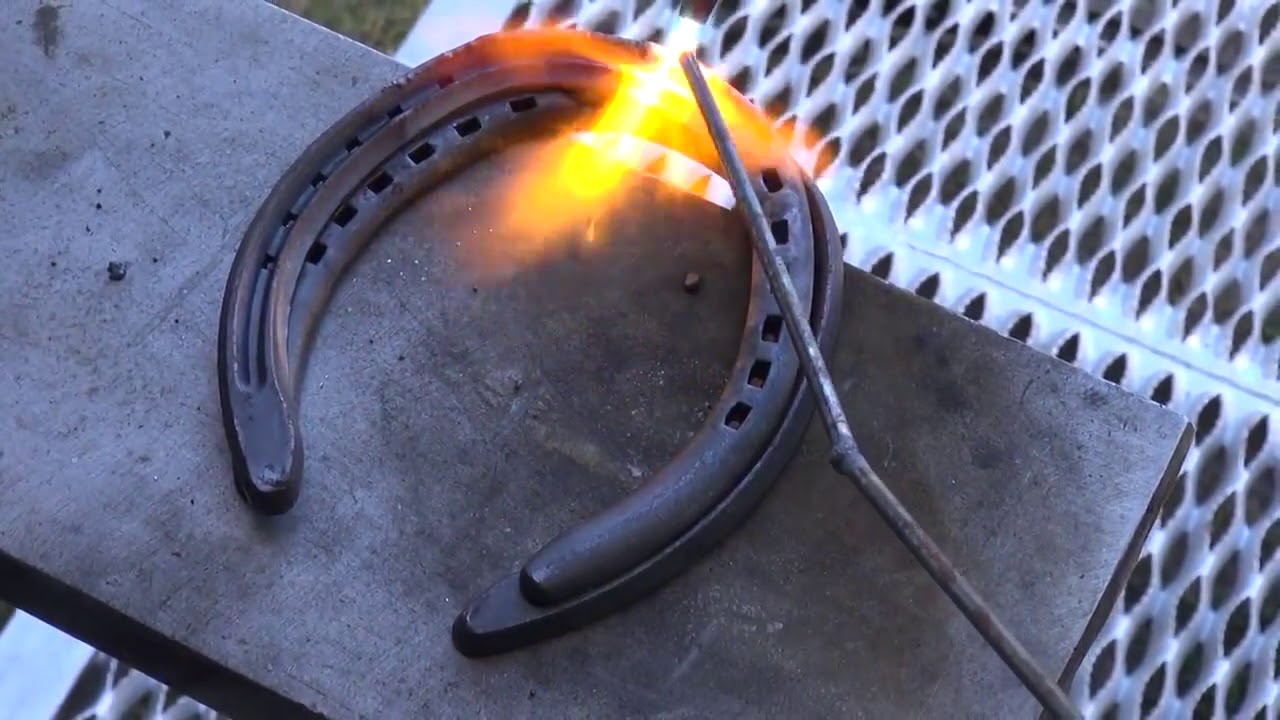
borium applied to shoe for additional traction
Aluminium: The Performance Farrier’s Default — and Its Limits
The case for aluminium in performance farriery comes down to one number: 73 grammes. That is the mass difference per shoe between a standard steel shoe (200 g) and its aluminium equivalent (127 g). Across four limbs, the total limb-distal mass saving is approximately 292 g. That reduction in the moment of inertia of the swinging limbs decreases the muscular effort required to decelerate the limb at the end of each swing phase, reduces energy expenditure per stride, and may reduce fatigue-related changes in landing pattern over extended competition distances.
Pure aluminium is too soft to use directly as a shoe. Commercial aluminium shoes are manufactured from 6000-series (aluminium–silicon–magnesium) and 7000-series (aluminium–zinc–magnesium) alloys, work-hardened to provide adequate fatigue resistance. But they remain significantly softer than steel — 60–80 HV versus 120–180 HV — which has two practical consequences.
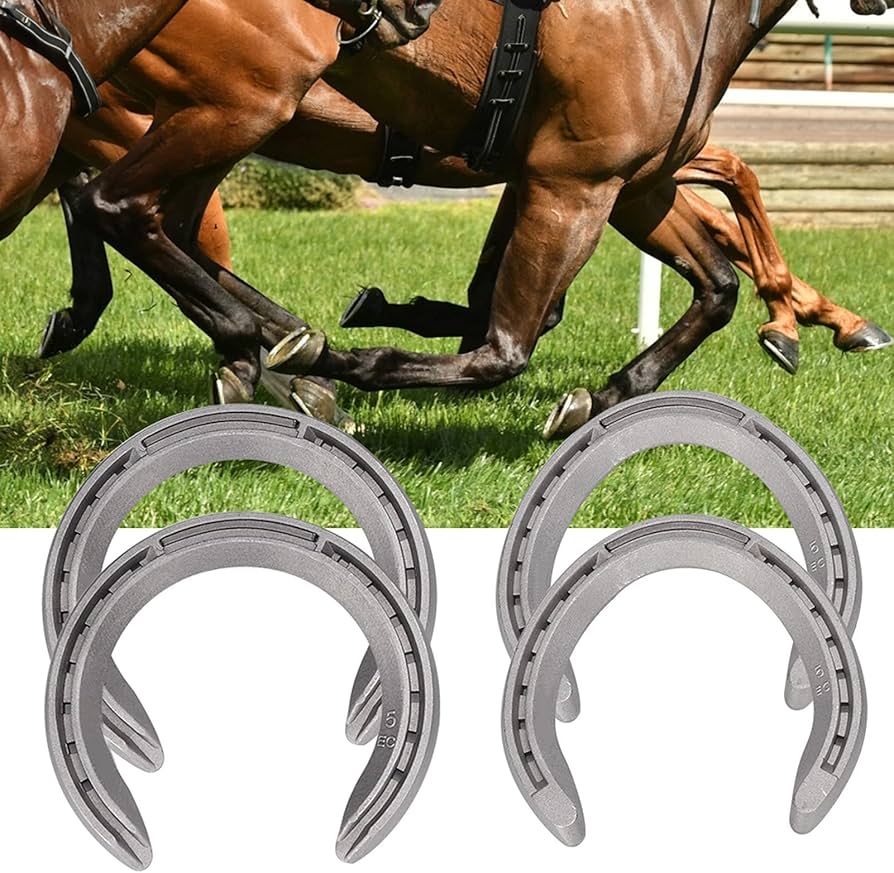
allumium race shoes
The Two Limitations of Aluminium 1. WEAR RATE — Aluminium wears two to four times faster than steel on hard or abrasive surfaces. On a racecourse or arena surface over a four-to-five-week shoeing cycle, this rarely matters. On a horse in regular road work, it matters a great deal. 2. GALVANIC CORROSION — When aluminium (less noble) is in electrical contact with steel nails (more noble) in the presence of an electrolyte — hoof moisture, ammonia from stable urine, or coastal salt — the aluminium corrodes preferentially at the nail hole. Over the shoeing cycle, this rounds the nail hole margin, reduces the mechanical grip of the clinch, and eventually causes premature shoe loosening. Copper-coated nails significantly reduce this reaction — a controlled study found nail hole pathology scores of 4.4 versus 6.1 for standard steel nails (p<0.01). |
Working with aluminium in the forge
Aluminium can be shaped in the forge, but overheating above approximately 600°C permanently alters the temper of the work-hardened alloy, substantially increasing its wear rate. Many performance farriers prefer to cold-fit aluminium using a bending bar and stall jack precisely to avoid this risk. When fire-fitting is used, the shoe should reach no more than a very dull red and should not be quenched rapidly. Borium and spray tungsten treatments cannot be applied to aluminium — the application temperatures exceed the alloy’s safe thermal range. For grip on aluminium shoes, screw-in studs are the only practical option.
Scalmalloy: The frontier of metal lightweighting
In 2024, three horses wearing 3D-printed Scalmalloy shoes competed in The Everest at Randwick — the world’s richest turf sprint — finishing first, second, and third. Each shoe weighed approximately 50 g: less than half the mass of a conventional aluminium shoe and one-quarter of a steel shoe. Scalmalloy is a scandium–aluminium–magnesium alloy developed for the aerospace industry and printed by selective laser melting, with internal lattice structures that place material only where structural analysis indicates it is needed. The shoes cannot be modified in the field, and cost remains prohibitive for routine use. But the trajectory is clear.
Nails: Not a Generic Fastener
The horseshoe nail is a precision engineering component. Its cross-section is rectangular, not circular. The bevel ground onto the inner face of its point is what steers it through the hoof wall — as the nail is driven, the bevel deflects the tip outward and away from the sensitive laminae, directing it through the insensitive white line and tubular horn to emerge at the outer wall surface at a height of approximately 15–20 mm. If the bevel is placed incorrectly or the nail drifts, it will not self-correct.
The most practically significant recent evidence on nail placement comes from a 2023 in-vitro biomechanical study from the University of California, Davis, and Sussex Equine Hospital (Singer et al.). Using strain gauges and kinematic markers on cadaveric forelimbs loaded to simulate walk, trot, and canter, the study demonstrated that nails placed beyond the widest part of the hoof (heel nails) significantly reduced heel expansion, increased wall strain at the heel region, and altered fetlock kinematics compared with toe-and-quarter nail patterns.
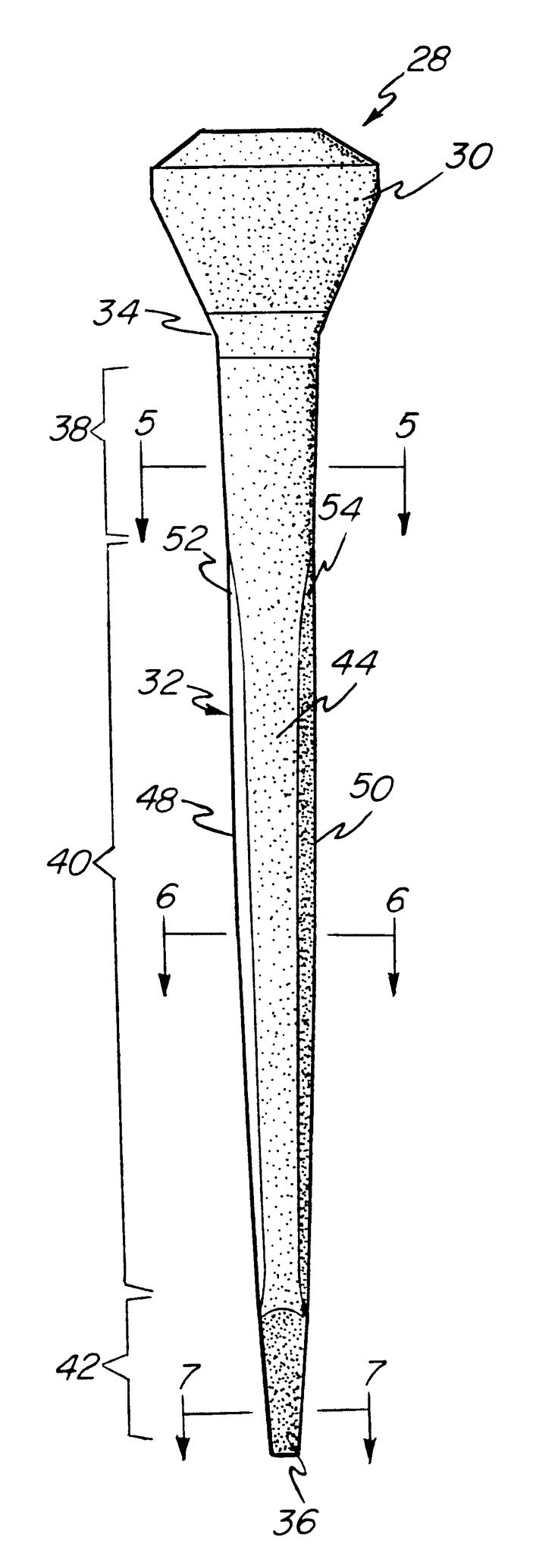
Horseshoe nails are not just a generic fastner
“Nail placement should not extend beyond the widest part of the hoof. Palmarly of this point, wall thickness decreases rapidly — and so does the mechanical purchase of the clinch.”
For horses with contracted heels or quarter cracks, this is directly actionable: removing heel nails from the pattern and using the minimum number of nails consistent with secure retention is an evidence-based management modification, not a compromise. For horses with aluminium shoes in high-ammonia stabling or coastal environments, copper-coated nails are a low-cost, evidence-supported choice that simultaneously addresses galvanic corrosion at the nail hole and the antimicrobial risk in hoof wall defects.
Composite and Polymeric Shoes: When Damping Matters
Composite shoes combine a steel structural core — providing rigidity, nail-hole integrity, and surface treatment compatibility — with a polyurethane outer shell that contacts both ground and solar margin. The purpose of the polymer component is damping: in-vitro accelerometer studies have measured 20–40% reduction in peak impact G-force at the hoof wall with polymer-based shoes versus standard steel.
This matters clinically for horses with navicular syndrome, solar sensitivity, or thin soles — conditions where the compressive and vibration loading of rigid steel on hard surfaces is contributing to ongoing discomfort. The steel insert in a composite shoe still accepts nails using the same selection principles described above; its steel composition still accepts borium at the heel sections if grip is also required. The polymer shell provides the damping without sacrificing the structural functions.
Pure polyurethane shoes — without a steel insert — offer maximum damping and can be shaped to the foot contour. They are glue-on only, wear considerably faster than composite equivalents, and deform under sustained load at elevated temperatures. Their clinical role is as a bridge: they belong in the rehabilitation context, not as a routine long-term shoeing option.
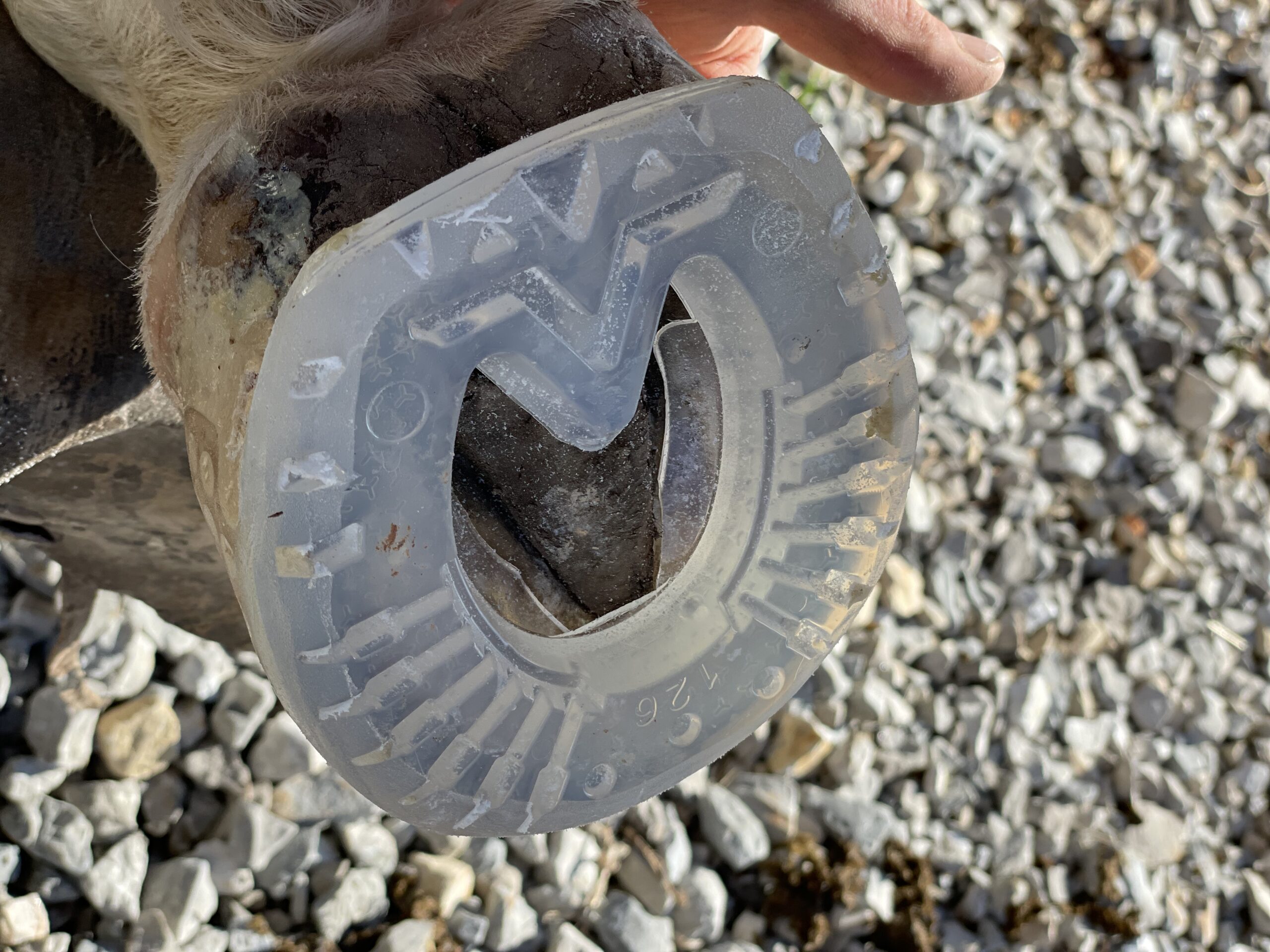
Glue-On Technology: Expanding What Farriery Can Do
Glue-on technology eliminates the nail entirely, replacing it with an adhesive bond between shoe and hoof capsule. It has opened therapeutic shoeing to horses where nailing is impossible or contraindicated, and it has enabled biomechanical modifications — precise medial or lateral extensions, solar support positioning, therapeutic wedging — that a nail pattern simply cannot deliver to the same degree of accuracy.
The Adhesive Chemistry
The adhesives used in equine glue-on farriery are predominantly two-component polymethylmethacrylate (PMMA) systems — a resin and a catalyst that polymerise at room temperature within minutes to form a bond of high tensile and shear strength. The most widely used in UK practice is Equilox. When applied correctly to a well-prepared surface, the bond is sufficient to retain a shoe through a four-to-six-week cycle under normal loading.
The critical word is ‘correctly’. Bond strength drops by 40–60% in the presence of oil, moisture, or blood contamination. The surface preparation protocol is not a minor procedural detail:
Glue-On Surface Preparation: The Non-Negotiable Protocol 1. Trim and balance the foot as for conventional shoeing 2. Degrease the hoof wall with acetone or isopropyl alcohol on a clean cloth — not a gloved hand (gloves transfer oils) 3. Rasp lightly across the cuff contact area to open horn tubules and improve adhesive keying 4. Apply a thin primer layer rubbed into the wall with a gloved finger 5. Mix adhesive for the full specified mixing time — incomplete mixing produces a weakened bond 6. Apply and hold firmly in the correct position for the full cure time “Any movement during curing creates shear stress at the bond interface and permanently reduces strength”. |
The cuff system
The most widely used glue-on system in UK sport horse practice is the aluminium shoe with an attached fabric cuff, of which the Sigafoos Series I (SoundHorse Technologies) is the most extensively documented. The cuff is a two-layer fabric sleeve that extends from the shoe up the outer hoof wall, bonded with composite adhesive. Its built-in urethane rim pad absorbs up to 50% of ground concussion and lifts the sole off contact with the shoe. A prospective cohort study of horses shod exclusively with glue-on cuff shoes for one year found significantly reduced dorsal wall deviation, improved hairline angle symmetry, and better maintenance of heel height compared with a conventionally nailed control group.
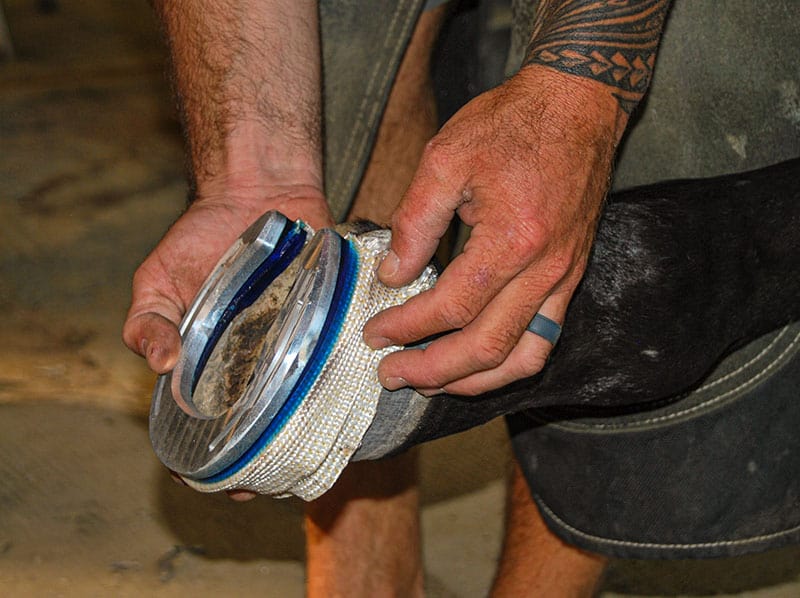
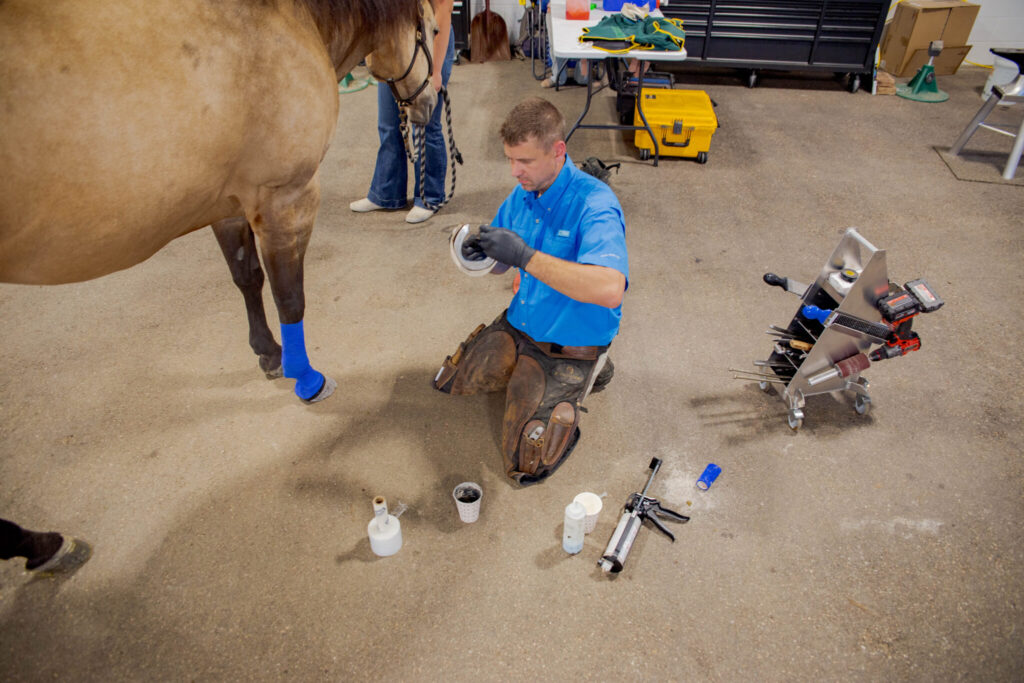
Sound Horse Technologies Sigafoos cuff shoe. as with all glue on shoes preperation is CRITICAL!
Glue-On in the Foal: Where It Moves from Useful to Essential
In the juvenile horse, glue-on technology is not an alternative to nailing. It is often the only means by which farriery intervention is possible at all. The neonatal hoof wall is thin, incompletely keratinised, and structurally incapable of retaining nails. Yet the most time-critical farriery interventions of a horse’s life must be delivered in the first weeks and months: correction of angular limb deformities (ALDs) and flexural limb deformities (FLDs) cannot wait for the wall to mature.
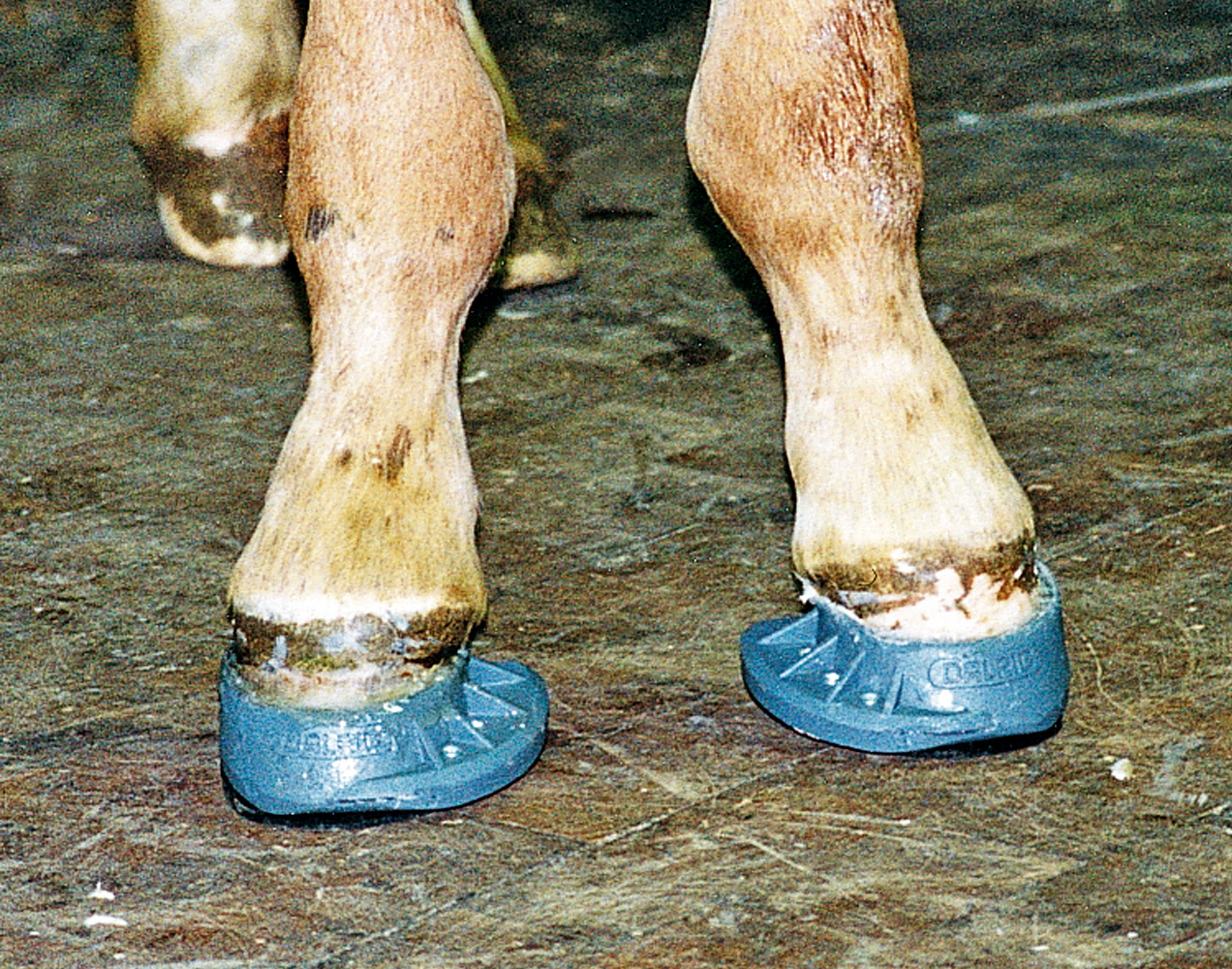
In the juvenile horse, glue-on technology is not an alternative to nailing. It is often the only means by which farriery intervention is possible at all. The neonatal hoof wall is thin, incompletely keratinised, and structurally incapable of retaining nails. Yet the most time-critical farriery interventions of a horse’s life must be delivered in the first weeks and months: correction of angular limb deformities (ALDs) and flexural limb deformities (FLDs) cannot wait for the wall to mature.
Angular Limb Deformities (ALDs): the extension principle
A carpal valgus (outward deviation at the knee) or carpal varus (inward deviation) in a young foal can often be managed conservatively through farriery before surgical intervention becomes necessary. The principle is mechanical: a medial or lateral extension bonded to the foot widens the support base on the side opposite the deviation, creating a corrective moment at the growth plate of the affected joint. In valgus, a medial extension shifts load medially; in varus, a lateral extension shifts load laterally.
For neonatal foals, the extension is fabricated from acrylic or a small acrylic plate bonded directly to the solar surface with PMMA composite. From four to six weeks, as horn integrity develops, a small aluminium bar shoe with extension can be applied using the cuff-and-composite technique. Extensions should project no more than 15–20 mm beyond the hoof wall — larger extensions increase tripping risk and can apply counterproductive lever forces. They should be checked at five-to-seven-day intervals and replaced at two-to-three-week shoeing cycles.
Flexural Limb Deformities (FLDs): a critical evidence update
This is the section where evidence-based practice matters most acutely — and where a widely used traditional technique is directly contraindicated by the current literature.
- The traditional practice of applying a toe extension to a foal with a grade 2 or 3 distal flexural limb deformity (club foot) in order to ‘force’ the heel down is NOT supported by current evidence.
- Toe extensions INCREASE tension in the deep digital flexor tendon (DDFT), worsen compression at the DIP joint, increase pain, and in the acute presentation may accelerate the grade of the deformity.
- The correct intervention is HEEL ELEVATION — a glue-on composite wedge pad bonded to the palmar aspect of the foot, which reduces DDFT tension by shortening the lever arm through which it acts across the DIP joint.
The heel elevation protocol is straightforward in principle: trim the foot to a flat, level solar surface; bond a composite wedge pad (typically 2–5° in early management) to the palmar aspect; and progressively reduce the elevation over three to four shoeing cycles as the DDFT–check-ligament unit lengthens. In very young foals where adhesive retention is unreliable because of movement during recumbency, a modified fibreglass hoof cast incorporating the correction offers circumferential support that reinforces the bond.
3D-Printed Horseshoes: From Research Lab to Racing Plate
Additive manufacturing — building objects layer by layer from digital models — enables a degree of individual customisation and geometric precision that conventional forge work or machine production cannot match. Two distinct clinical applications are emerging: polymer printing for therapeutic customisation, and metal printing for elite performance.
Polymer 3D printing: custom therapeutic shoes
The most systematically designed clinical programme for polymer 3D-printed therapeutic horseshoes was initiated at Utrecht University’s Academic Veterinary Hospital by farriers Jan de Zwaan and Gerben Bronkhorst, with Professor René van Weeren and Harold Brommer. Their system integrates a 90-second photogrammetric scan of the hoof with CAD software that incorporates therapeutic modifications to millimetre precision, producing a shoe with a cuff contoured to the exact profile of the individual hoof wall in a six-to-eight-hour print cycle. The adhesive system is standard PMMA composite, applied with the same surface preparation protocol described above.
A 2023 materials science study by Nakagawa and colleagues tested the structural stability of PLA and polycarbonate printed horseshoes under conditions simulating a standard shoeing cycle in an equine stable environment. Neither material showed significant reduction in tensile or compressive strength over the test period — providing the first peer-reviewed evidence base for polymer 3D shoe material viability. The main engineering limitation is anisotropy: printed polymers are significantly weaker perpendicular to the print layers than in the print plane, making inter-layer delamination the primary failure mode. High infill density (80–100%) and careful print orientation substantially reduce this risk.
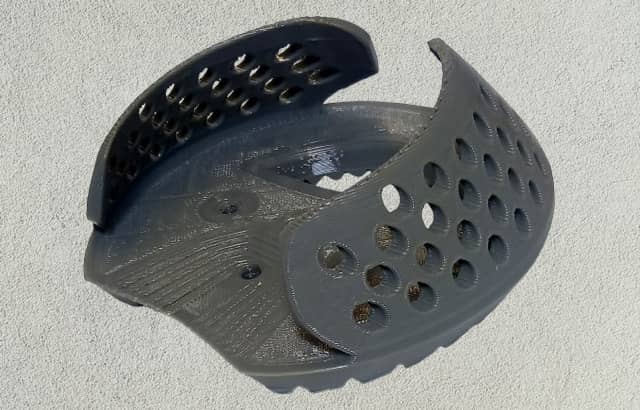
Additive 3D manufacturing — building objects layer by layer from digital models — enables a degree of individual customisation
Metal 3D printing: the AeroRaceShoe
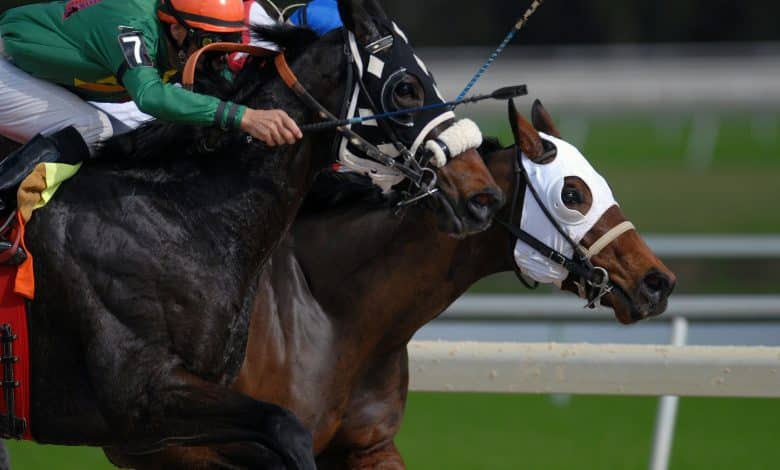
APWORKS, an Airbus subsidiary, has produced a horseshoe from Scalmalloy using selective laser melting: the AeroRaceShoe weighs approximately 50 g, uses generative design to place material only where structural analysis requires it, and has tensile properties exceeding conventional 6000-series aluminium at less than half its mass. In October 2024, three horses wearing AeroRaceShoe designs competed in The Everest — the world’s richest turf race at Randwick — finishing first, second, and third. This is not a controlled clinical trial. But it is a compelling commercial demonstration.
“Steel 200 g, aluminium 127 g, Scalmalloy 50 g. That is the trajectory of metal shoe mass reduction — and it is not yet at its limit.”
The Quick Reference: Materials at a Glance
| Material | Mass | Hardness | Best For | Key Limitation |
| Mild steel (A-36) | 200 g | 120–180 HV | General work; all disciplines; forge modification | Heaviest; transmits impact; no inherent damping |
| Aluminium alloy | 127 g | 60–80 HV | Racing; performance sport; therapeutic bar shoes | Wears faster; galvanic nail holes; no borium |
| Scalmalloy (3D-printed) | 50 g | Exceeds Al | Elite racing and performance | Very high cost; no field modification |
| Composite (steel + PU) | ~160 g | Steel insert | Sensitive feet; navicular; post-surgical | Costs more; PU shell wears faster |
| Pure polyurethane | Light | Shore A 60–80 | Glue-on rehabilitation; sensitive feet | Fast wear; no nails; temperature-sensitive |
| Glue-on cuff system | Varies | Al insert | Poor wall; post-avulsion; foal farriery | Prep-critical; wall degradation if prolonged |
The Bottom Line
Every shoe is a materials science decision. The steel shoe that has served horses for a millennium is still the right answer for most horses in most contexts — but only if the farrier can articulate why. Aluminium is not simply ‘lighter’; it is a material with specific thermal limitations, a galvanic failure mode with steel nails, and an inability to carry welded traction treatments. Composite shoes are not merely ‘kinder’; their polyurethane component provides quantified damping at the cost of reduced durability, and their surface treatment compatibility depends on whether they carry a steel insert.
Glue-on technology is not a specialist adjunct. In any horse with inadequate wall for nailing — and in every foal requiring developmental intervention — it is the primary delivery mechanism of farriery. Understanding adhesive chemistry, surface preparation, and bond failure modes is as fundamental as knowing how to drive a nail.
And 3D printing, from polymer therapeutic customisation to Scalmalloy racing plates, is transitioning from research to practice. The farrier who understands the materials science now will be positioned to evaluate and adopt these technologies as the evidence base develops.
Key References
- Nakagawa Y, Yoshida K, Kaneko D, Ikeda S. Degradation behaviour of glue-on three-dimensional printed plastic horseshoes in equine stables. Eng. 2023;4(4):2991–3006.
- Singer MA, Garcia TC, Stover SM, Hawkins DA. Hoof expansion, deformation, and surface strains vary with horseshoe nail positions. Animals. 2023;13(11):1872.
- Hampson BA, de Laat MA, Mills PC, Pollitt CC. A comparative study on the effects of copper and steel nails on the health of horseshoe nail holes. J Equine Vet Sci. 2018;65:71–76.
- Benoit P, Barrey E, Regnault JC, Brochet JL. Comparison of the damping effect of different shoeing by the measurement of hoof acceleration. Acta Anat (Basel). 1993;146:109–13.
- O’Grady SE. Farriery for the foal: A review part 2: Therapeutic farriery. Equine Vet Educ. 2020;32:580–589.
- O’Grady SE, Poupard DA. How to incorporate a modified hoof cast into equine veterinary practice. Proc Am Assoc Equine Pract. 2021;67:218–25.
- Cheramie HS, O’Grady SE. Hoof repair and glue-on shoe technology. Vet Clin North Am Equine Pract. 2003;19:519–30.
- APWORKS GmbH. AeroRaceShoe technical report. Munich: APWORKS; 2024.