

Recognising and Grading High/Low Limb Conformation in Horses A review for farriery professionals
Stig Haga., Mark Caldwell.
Introduction
High/low limb conformation — commonly referred to in farriery practice as “high/low hoof syndrome” — describes a consistent asymmetry between paired limbs, most often the forelimbs, where one foot presents with a steeper dorsal hoof wall angle and more upright capsule (the “high” foot), while the contralateral foot develops a flatter profile with lower, frequently underrun heels (the “low” foot). This presentation is widely recognised by farriers and veterinarians, yet remains variably defined within the scientific literature.
While the term “high/low syndrome” is not consistently used in peer-reviewed research, substantial evidence exists describing hoof asymmetry, limb loading differences and their biomechanical and clinical consequences (Clayton, 1990; van Heel et al., 2010). This article integrates current peer-reviewed knowledge with established farriery experience to provide a practical, evidence-based approach to recognising, grading and managing high/low conformation in horses.
Equine Hoof and Limb Asymmetry
Bilateral asymmetry is a normal biological phenomenon and is well documented in the equine musculoskeletal system. Studies have demonstrated that differences in hoof dimensions, hoof wall angles and distal limb alignment between left and right limbs are common even in clinically sound horses (Leśniak et al., 2013). These asymmetries are not merely cosmetic; they are associated with altered loading patterns and differences in force distribution during stance and locomotion (Hobbs et al., 2018).
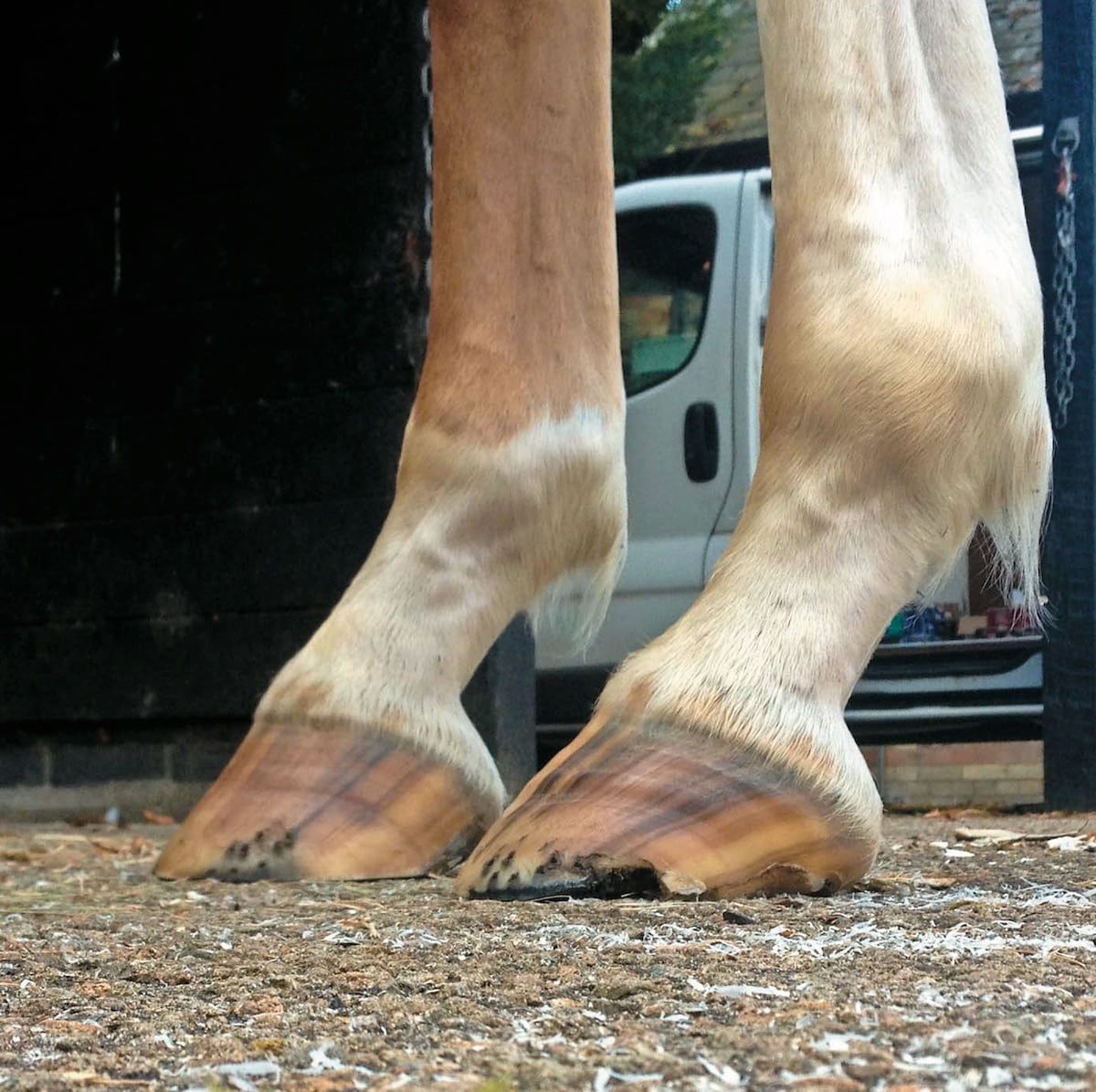
Miss matched feet often considered symptomatic of so called “high/low” syndrome is both common and multi factorial
Hoof conformation has a direct influence on limb biomechanics. Flatter feet typically experience longer break-over durations, increased vertical and braking forces, and greater strain on the deep digital flexor tendon and distal interphalangeal joint (Clayton, 1990; van Heel et al., 2010). Conversely, steeper feet demonstrate reduced fetlock extension and altered shock-absorption characteristics. When such differences occur between paired limbs, compensatory movement patterns frequently develop, which may predispose horses to chronic musculoskeletal stress and lameness (Mata et al., 2024).
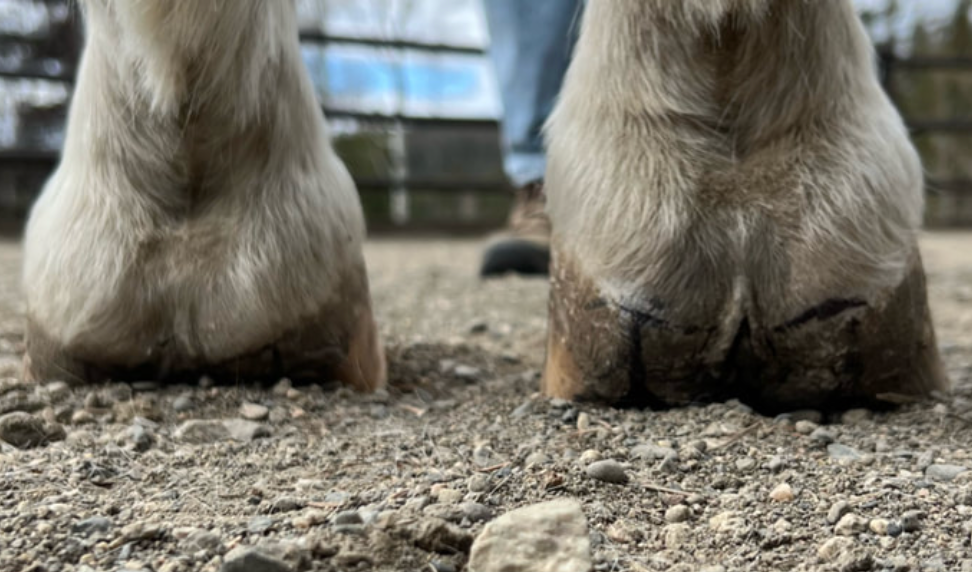
Asymmetric feet have a direct influence on limb biomechanics and shock attenuation in addition to the dynamics of the swing phase
Aetiology: Cause or Consequence?
The origin of high/low conformation remains a subject of debate. Proposed contributing factors include genetic predisposition, in-utero positioning, early postural habits, limb dominance and compensatory adaptations to asymmetrical loading or pain. Behavioural studies have demonstrated that foals may preferentially load one forelimb during grazing and nursing, influencing hoof development during critical growth phases (van Heel et al., 2006).
Genetic influences on limb conformation and skeletal asymmetry have also been demonstrated, supporting the view that some horses may be predisposed to developing uneven feet irrespective of management quality (Leśniak et al., 2013). However, the current literature does not support the assertion that all high/low presentations are inherently pathological. Instead, many cases appear to represent adaptive responses to functional asymmetry rather than primary disease processes (Hobbs et al., 2018; Mata et al., 2024).
Comparisons are often made between equine high/low conformation and human limb length discrepancy. Such parallels should be drawn cautiously, as horses rarely demonstrate true anatomical limb length differences; rather, functional discrepancies typically arise from differences in joint orientation, hoof morphology and loading strategies (Clayton, 1990).
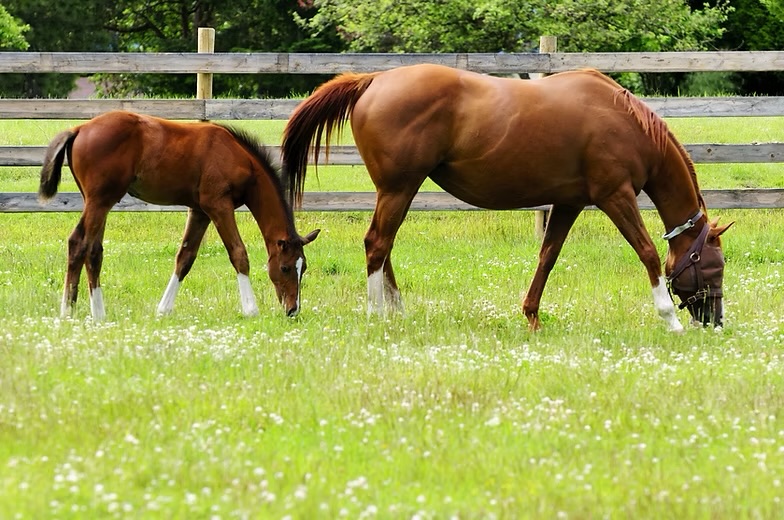
Limb length disparity has been linked to adaptive grazing stance however caution is urged as the causes can be multi factorial including genetic confirmation traits
Recognition and Assessment
Static Assessment
At rest, the low foot typically bears a greater proportion of body weight and may present with a flatter sole, reduced heel height and a broken-back hoof–pastern axis. The high foot often appears narrower, more upright and may resemble a mild club foot. Asymmetry may also be visible at the level of the shoulder girdle, with differences in scapular height or musculature reflecting altered loading patterns (van Heel et al., 2010).
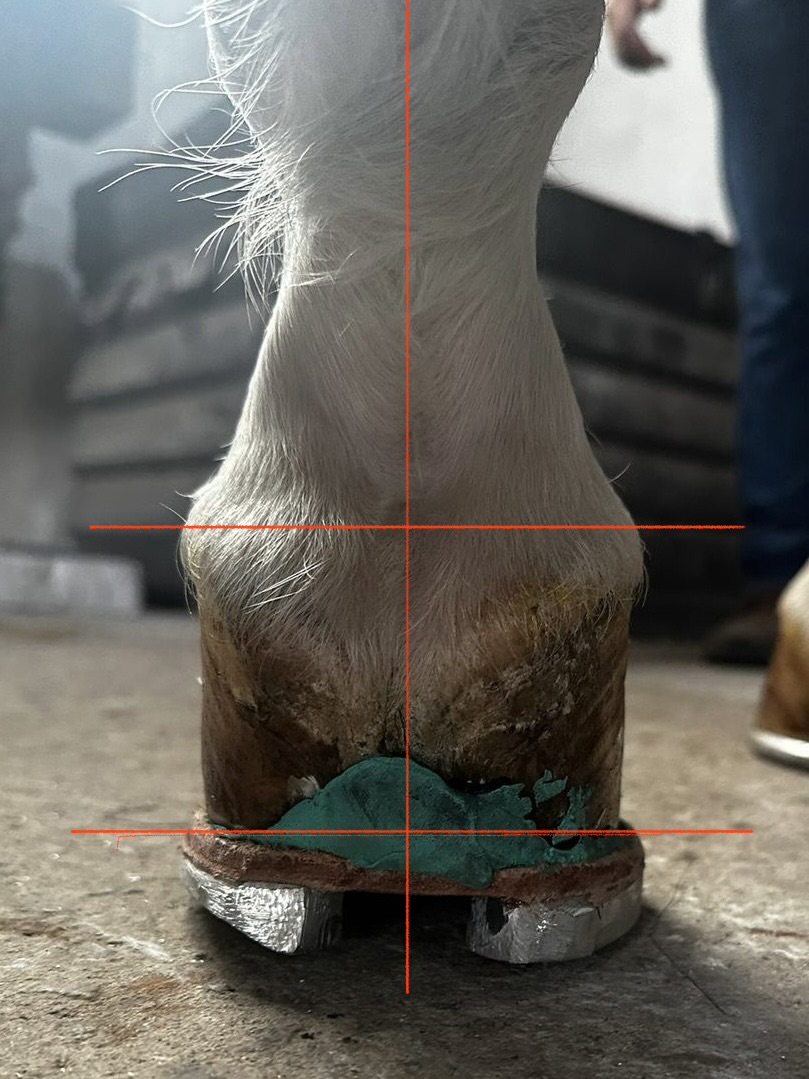
Clinical signs of asymmetrical are visible within the hoof morphology particularly the heel and toe proportions
Recognition and Assessment
Static Assessment
At rest, the low foot typically bears a greater proportion of body weight and may present with a flatter sole, reduced heel height and a broken-back hoof–pastern axis. The high foot often appears narrower, more upright and may resemble a mild club foot. Asymmetry may also be visible at the level of the shoulder girdle, with differences in scapular height or musculature reflecting altered loading patterns (van Heel et al., 2010).
Dynamic Assessment
During movement, horses with high/low conformation may display subtle gait asymmetries, including differences in stride length, break-over timing and limb flight arc. These asymmetries may be mistaken for low-grade lameness and are best assessed using slow-motion video or objective gait analysis where available (Hobbs et al., 2018; Mata et al., 2024).
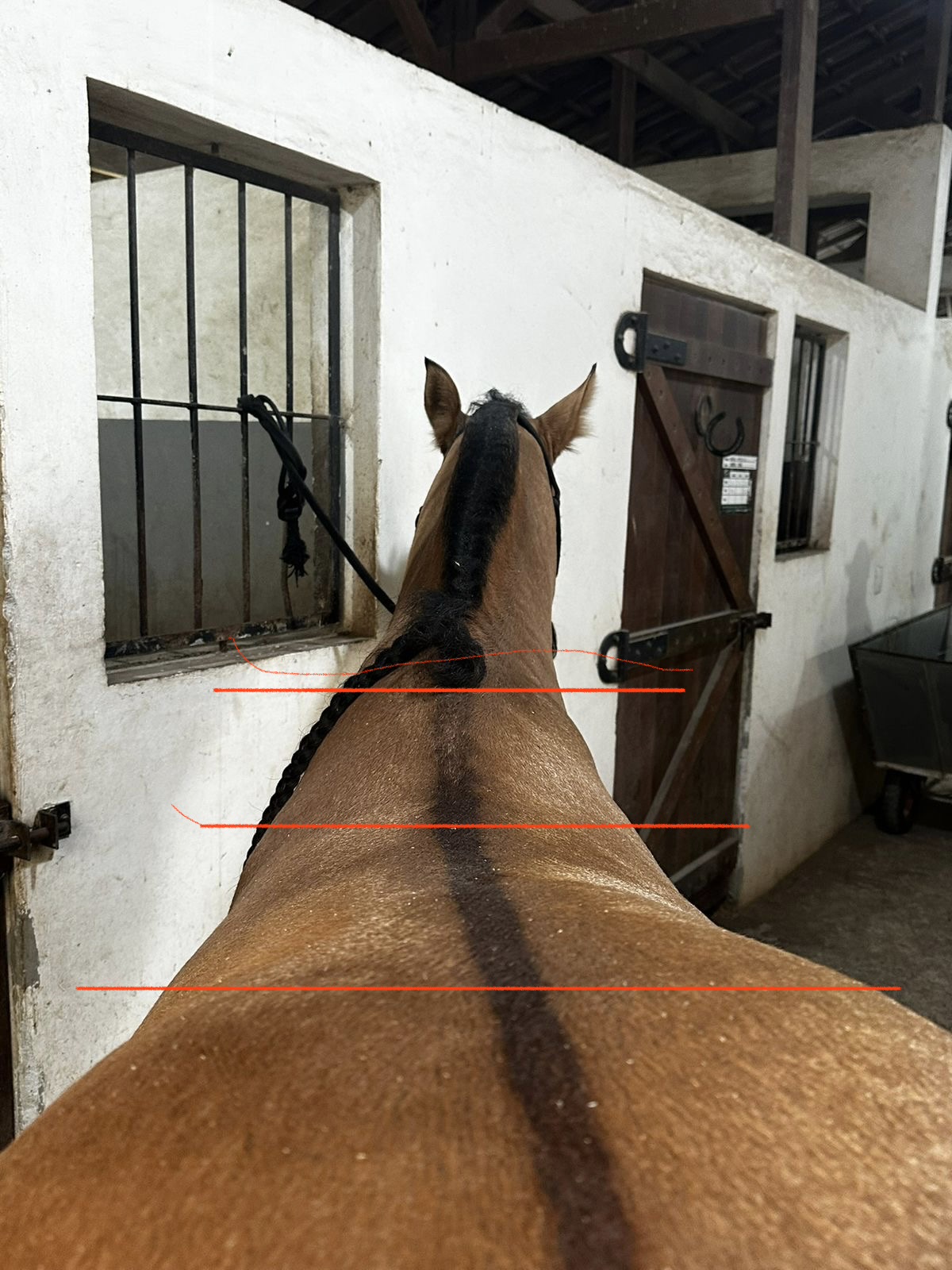
Signs of foot asymmetry are often visible at the shoulder girdle
Objective Measurement
Objective measurements such as dorsal hoof wall angle, heel height, hoof width and coronet band orientation provide valuable data for monitoring progression or response to farriery intervention. Although no universally accepted thresholds exist, consistent differences between paired limbs are considered clinically meaningful (Mata et al., 2024).
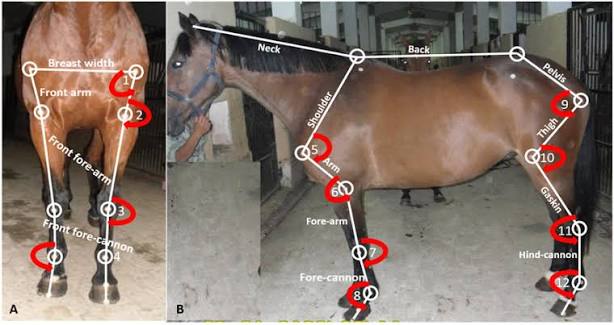
Objective measurements are helpful for comparative analysis with common ideals
Dynamic Assessment
During movement, horses with high/low conformation may display subtle gait asymmetries, including differences in stride length, break-over timing and limb flight arc. These asymmetries may be mistaken for low-grade lameness and are best assessed using slow-motion video or objective gait analysis where available (Hobbs et al., 2018; Mata et al., 2024).
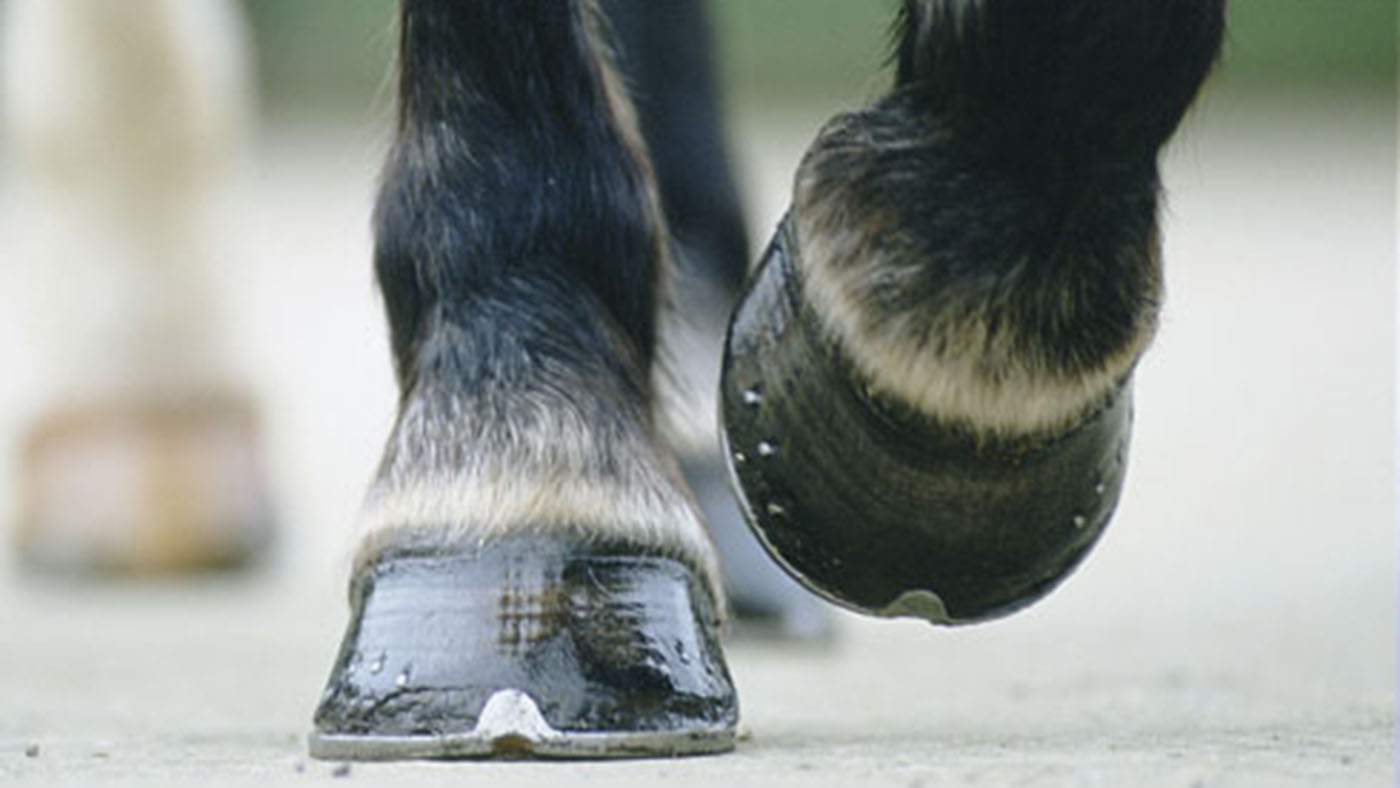
Dynamic assessment of landing, loading and acceleration phases of the stride form a useful adjunct to the overall design of any ongoing shoeing plan
Grading High/Low Conformation and outline farriery strategies
Low Degree
Horses in this category exhibit mild asymmetry with minimal differences in hoof angle, capsule morphology or distal limb alignment. Dynamic movement remains largely symmetrical and compensatory adaptations are limited (Leśniak et al., 2013).
Management
Routine trimming and shoeing with emphasis on maintaining balance and appropriate break-over. Ongoing monitoring is recommended.
Intermediate Degree
Clear asymmetry is present, including visible differences in hoof angle, growth patterns and distal limb alignment. Dynamic gait asymmetry is usually detectable, though overt lameness may not be present (Hobbs et al., 2018).
Management
Individualised trimming and shoeing strategies aimed at improving heel support on the low foot and moderating break-over. Shoe modifications or pads may be indicated, with veterinary collaboration advised if performance limitations occur (Mata et al., 2024).
High Degree
Marked asymmetry exists with significant differences in hoof capsule morphology, limb posture and movement. Secondary musculoskeletal strain and reduced performance are common (Clayton, 1990).
Management
Conservative trimming combined with corrective and supportive shoeing. Aggressive trimming to force symmetry should be avoided. Frequent reassessment and close veterinary involvement are essential.
Attempts to impose identical hoof angles on asymmetrical limbs may increase strain elsewhere in the musculoskeletal system (Clayton, 1990; Hobbs et al., 2018).
Photo credit Esco Buff
Farriery Principles and Limitations
Farriery intervention should prioritise functional balance rather than cosmetic symmetry. Attempts to impose identical hoof angles on asymmetrical limbs may increase strain elsewhere in the musculoskeletal system (Clayton, 1990; Hobbs et al., 2018). Instead, the goal should be to optimise each limb’s ability to load, support and propel the horse efficiently.
It must be recognised that complete correction of high/low conformation is not always achievable. In many cases, long-term success lies in effective management to minimise compensatory stress and maintain soundness rather than pursuing absolute symmetry (Mata et al., 2024).
High/low limb conformation represents a complex interaction between anatomy, biomechanics, development and adaptation. Although the terminology commonly used in farriery practice is not always reflected in the scientific literature, the underlying principles are supported by research on hoof asymmetry, limb loading and gait biomechanics (Leśniak et al., 2013; Hobbs et al., 2018).
By combining objective assessment, informed clinical judgement and evidence-based farriery strategies, practitioners can manage high/low conformation effectively and improve long-term outcomes for horses across disciplines.
References
Clayton, H.M. (1990) The effect of an acute hoof wall angulation on stride kinematics of trotting horses. Equine Veterinary Journal Supplement, 9, pp. 86–90.
Hobbs, S.J., Richards, J., Matuszewski, B.J., Brigden, C., Nankervis, K. and Clayton, H.M. (2018) Sagittal plane forelimb asymmetries are associated with differential limb loading in horses. PLoS ONE, 13(3), e0193766.
Leśniak, K., Clayton, H.M., Stachurska, A., Zeisler, H. and Wolframm, I.A. (2013) Associations between limb laterality and hoof and limb asymmetries in horses. Equine Veterinary Journal, 45(1), pp. 38–43.
Mata, F., Hernlund, E., Rhodin, M., Persson-Sjodin, E. and Egenvall, A. (2024) Associations between hoof conformation and the presence of lameness in horses. Animals, 14(18), 2697.
van Heel, M.C.V., Kroekenstoel, A.M., van Dierendonck, M.C., van Weeren, P.R. and Back, W. (2006) Uneven feet in a foal population: The relation between foal conformation and grazing behaviour. Equine Veterinary Journal, 38(7), pp. 646–651.
van Heel, M.C.V., Moleman, M., Barneveld, A., van Weeren, P.R. and Back, W. (2010) Changes in location of centre of pressure and hoof loading patterns in uneven feet. Equine Veterinary Journal, 42(6), pp. 525–530.
You must be logged in to post a comment.
What is high-low syndrome in horses?
High-low syndrome refers to a condition where a horse’s front hooves are noticeably different in shape and angle. One hoof is typically more upright with a steeper angle and higher heel, while the other has a flatter profile, lower heel, and longer toe. It’s a common form of hoof asymmetry and may affect a horse’s movement and balance depending on the severity.