
FARRIERY THE QUIET DECLINE
Twenty Years of Change in Farriery and Why It’s On You.
A wake-up call to an industry that spent two decades watching the tide go out – and now wonders why it’s standing in the mud. – Stop Waiting for Someone Else to Fix This
Let’s cut the pleasantries.

If you’ve been in UK farriery for any length of time, you already know something is badly wrong. You can feel it. Fewer apprentices. Longer waiting lists. Clients who’d rather take hoof care advice from a stranger on Facebook than from the professional standing in front of them with four years of training and twenty years of calluses.
You know all this. You talk about it in the pub, at competitions, in the group chats. You complain about it. You shake your heads about it. And then you go back to doing exactly what you’ve always done, exactly the way you’ve always done it, and wonder why nothing changes.
Here’s the uncomfortable truth: this decline didn’t happen to you. It happened because of you. Not because you’re bad at your craft – most of you are bloody good at it. But because you assumed that being good would be enough. That the world would keep coming to you. That reputation and regulation would hold the line while you got on with the work.
They didn’t. And they won’t.
This article isn’t a sympathetic pat on the back. It’s a mirror. And if you don’t like what you see in it, good. That means it’s working.
 The Barefoot Movement Didn’t Steal Your Clients. You Gave Them Away.
Let’s start with the elephant in the room. The barefoot movement didn’t creep up on anyone. It’s been building since the early 2000s, and for twenty years the farriery profession’s response has been somewhere between dismissal and contempt. “They don’t know what they’re doing.” “It’ll blow over.” “You can’t trim a horse without a licence.”
How’s that strategy working out?
The barefoot movement grew because it answered questions that the profession refused to ask. Horse owners wanted to understand their horse’s feet. They wanted involvement in the decision-making. They wanted someone who’d talk to them – actually explain what was going on – rather than shoe the horse and leave. When the profession wouldn’t provide that, someone else did. Yes, the unregulated trimmer market is a problem. Yes, there are people out there doing damage with a rasp and a weekend certificate. Yes, the Farriers Registration Act exists for a reason. But none of that matters if horse owners don’t see the value in what you offer versus what the alternative offers and right now, too many of them don’t.
The barefoot world understood something the profession didn’t: that the modern horse owner doesn’t want to be told. They want to be taught. They want to understand why, not just what. And they’ll go wherever that understanding is
offered, regulated or not.
You can stand on the Farriers Registration Act until you’re hoarse. But legislation doesn’t build client relationships. Education does. Communication does. The profession has been woefully short on both.
Your Training System Is Dying – And You’re Letting It
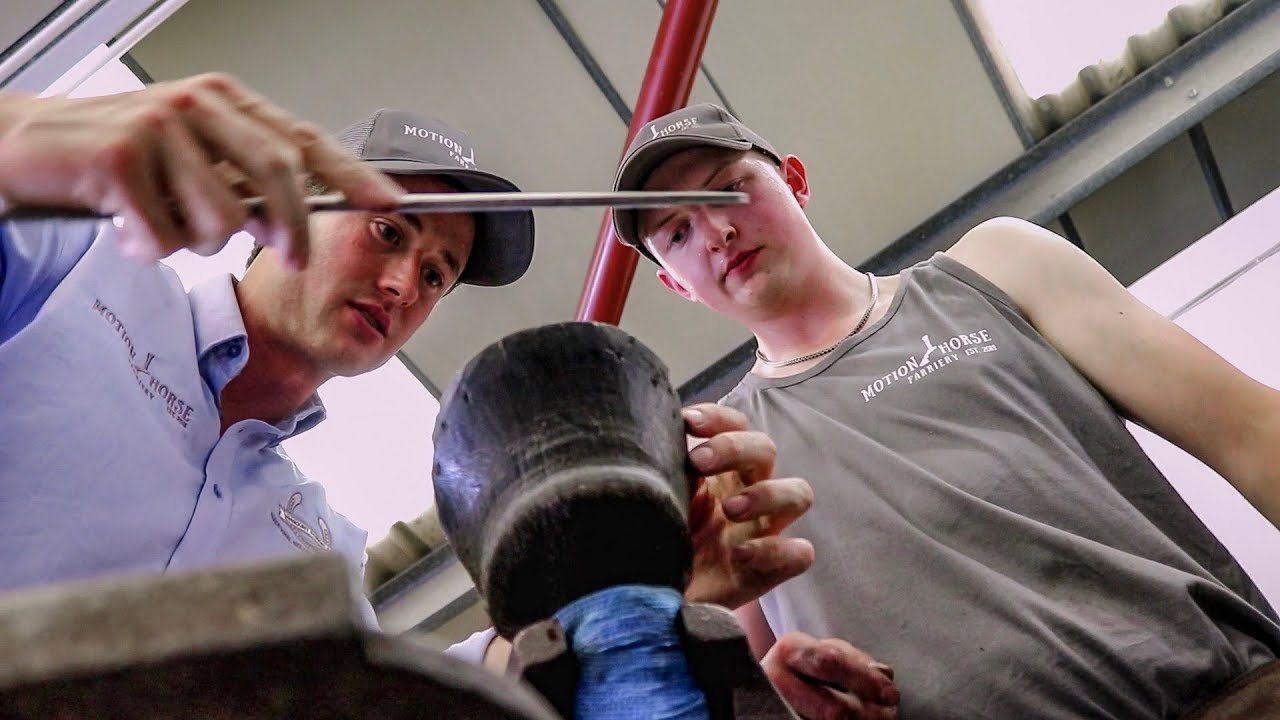
The farriery apprenticeship, so long considered the global gold standard of farriery training, used to be something to be proud of. Four years minimum. Hands-on, day in, day out, under the eye of someone who’d done the job for decades. A brutal, brilliant education that produced farriers who could read a foot, shape a shoe, and handle a difficult horse before they were twentyfive.
That system is on life support. And while it’s easy to blame the government – and God knows they’ve made it harder with every round of apprenticeship reform – the profession has to own its part in this.
How many established farriers are taking on apprentices right now? How many are willing to accept the reduced productivity, the admin burden, the sheer bloody patience it takes to train someone from scratch? The answer, if the numbers are anything to go by, is not nearly enough.
The excuses are familiar: the paperwork is too much; the funding doesn’t cover it; I can’t afford to slow down. And every one of those excuses is valid. But here’s the thing – someone trained you. Someone took that hit so you could have a career. And if this generation decides the price is too high, there won’t be a next generation. Full stop.
The profession needs to stop treating training as someone else’s problem. It needs to lobby harder for funding that reflects the reality of one-to-one craft mentorship. It needs to create bursary schemes, mentorship networks, financial incentives that make taking on an apprentice viable rather than heroic. And it needs to do this now, not at the next AGM, not after the next review – now. Because the demographic cliff isn’t coming. It’s here.
 The Money Problem Is Real. But It’s Not the One You Think.
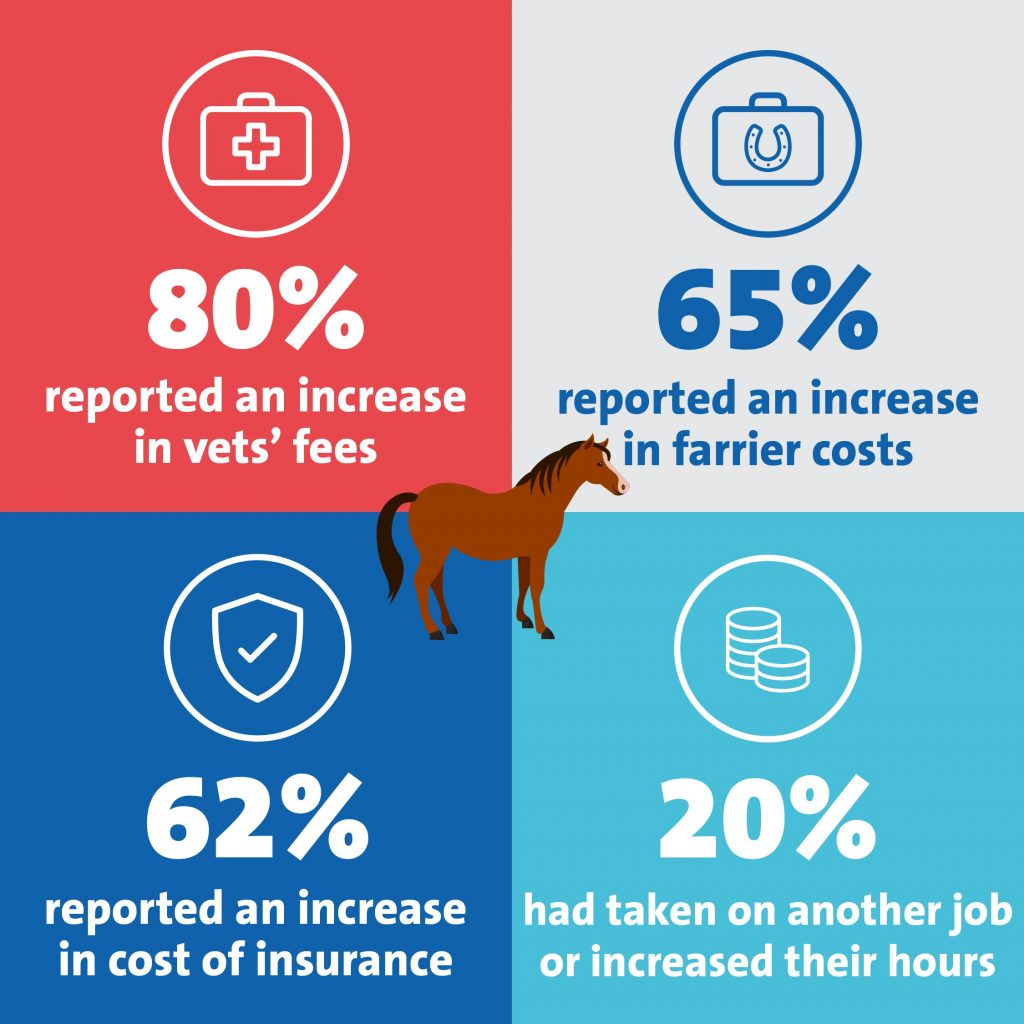
Farriery costs money. Tools, vehicles, fuel, insurance, materials, the physical toll on your body – all of it adds up, and none of it is optional. Your prices have gone up because they’ve had to, and any horse owner who thinks £80 for a set of shoes is expensive has clearly never priced a mobile forge, four years of training, and a lifetime’s worth of ibuprofen.
But here’s where the profession is losing the argument: it’s not making the case. Most farriers shoe the horse, name the price, and leave. No explanation of the overhead. No articulation of the value. No framing of what the alternative actually costs in terms of long-term soundness, veterinary bills, or the welfare of the animal.
Every time an owner decides shoes are too expensive and goes barefoot without proper guidance, that’s a communication failure, not just a market force. Every time someone extends their shoeing cycle to ten weeks because they’re watching the pennies, and nobody explains why that’s a false economy – that’s a missed opportunity.
The profession needs to get comfortable talking about money. Not apologising for it. Not resenting the question. Actually making the case, with evidence, for why professional farriery is an investment in the horse’s long-term wellbeing, not a luxury line item to be trimmed when the budget’s tight.
The Vets Didn’t Take Your Territory. You Left the Door Open.
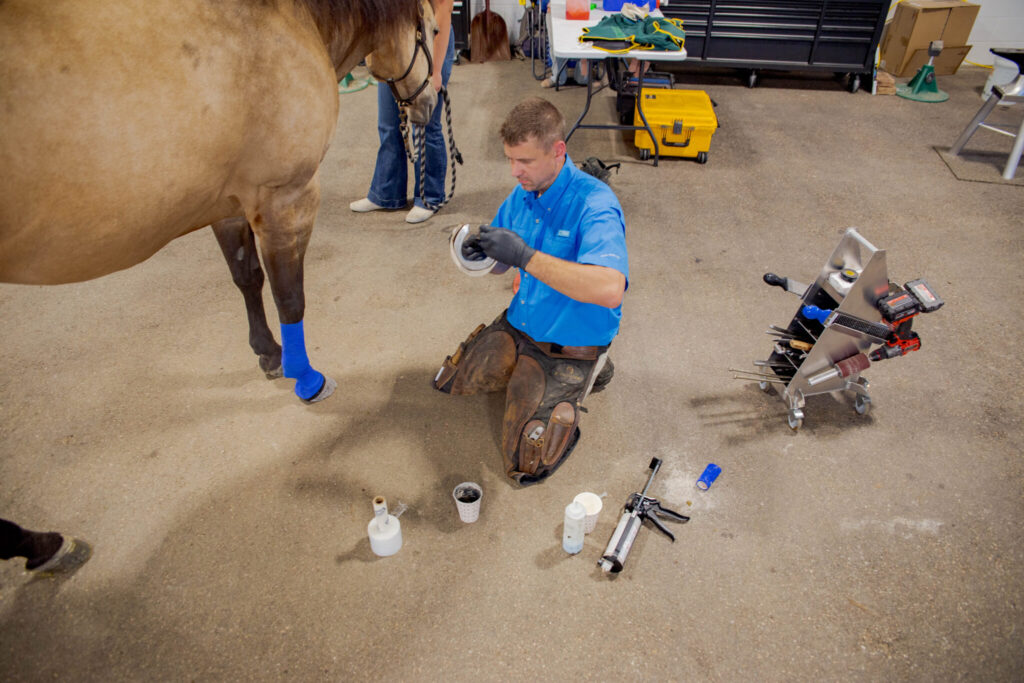
Veterinary podiatry is booming. Equine practices have worked out that lameness investigation and remedial foot care are serious revenue streams, and they’re tooling up accordingly. MRI, digital radiography, bespoke shoeing prescriptions – all delivered at veterinary prices, with the farrier increasingly positioned as the technician who follows the vet’s instructions.
And you know what? Fair play to them. They saw an opportunity and they took it. They invested in equipment, in qualifications, in marketing. They positioned themselves as the experts in equine foot health, and horse owners bought it.
But let’s be honest about what happened here. The veterinary profession didn’t steal remedial work from farriers. Farriers allowed a vacuum to form. When the profession failed to develop its own advanced qualifications, its own evidence base, its own public narrative about what experienced farriers bring to remedial cases, the vets filled the space. Because that’s what happens when you leave a gap in the market – someone fills it, and they don’t ask your permission.
This is not about being anti-vet. Good farrier-vet collaboration produces the best outcomes for the horse, and always has. But collaboration means two equal professionals bringing their respective expertise to the table. Not one directing and the other executing. If the profession wants to reclaim its standing in remedial work, it needs to invest in advanced qualifications, publish its outcomes, and demonstrate – with data, not tradition – what the farrier’s eye and hand bring to the equation.
 You Lost the Information War Without Even Showing Up
In 2005, a horse owner who wanted to know about hoof care had three options: ask their farrier, ask their vet, or read a book. The farrier was the primary authority. The relationship was built on trust, proximity, and the simple fact that there was nobody else to ask.
In 2026, that same owner has a phone full of Facebook groups, Instagram accounts, TikTok influencers, and YouTube channels, all offering hoof care advice with the confidence of absolute certainty and the accountability of precisely zero. Some of it is excellent. Most of it is noise. And the profession’s official response has been to stand at the sidelines and tut.
While unregulated voices built audiences of tens of thousands, the professional bodies produced – what, exactly? The odd newsletter? A website that hasn’t been updated since the last administration? A strongly worded statement that nobody outside the profession ever saw?
The information war was lost by default. Not because the profession didn’t have the knowledge – it has more knowledge than any Facebook group could dream of. But because it wouldn’t lower itself to compete on the platforms where horse owners actually live. It wouldn’t create the content. Wouldn’t engage with the questions. Wouldn’t meet people where they are.
That has to change. Not grudgingly. Not half-heartedly. The profession needs a digital presence that matches the depth of its expertise. Professional, accessible, evidence-based content that shows up when a horse owner searches for “navicular disease” or “white line separation” or “should I take my horse’s shoes off.” First result. Every time. Because if you’re not providing the answer, someone else is. And they’re not necessarily right.
Platforms are emerging that are trying to do exactly this. HoofFlix exists because this gap is real and the consequences of leaving it unfilled are measurable. Evidence-based equine education, delivered by credentialled professionals, accessible to everyone from the vet to the horse owner. It should not have taken an external platform to do what the profession’s own bodies should have built a decade ago. But here we are. The question is whether you’ll use what’s being built, contribute to it, and help shape it, or whether you’ll stand on the sidelines and watch that opportunity pass you by as well.
Your Clients Changed. You Didn’t.
The horse-owning demographic in the UK is not what it was twenty years ago. Fewer people grew up around horses. Fewer have generational knowledge passed down through yards and pony clubs and decades of accumulated wisdom. More came to horses as adults, through riding schools and share schemes and sheer love of the animal.
These owners are educated, digitally literate, and accustomed to researching everything. They don’t defer to authority by default. They want to understand. They want explanations. They want a professional relationship that feels like a partnership, not a transaction.
And too often, what they get from the farrier is a shrug. A grunt. A “see you in six weeks.” No explanation of what was done or why. No education about what to watch for between visits. No engagement with the questions they’ve been building up since the last appointment.
This is not about pandering. It’s about professional communication. Every other service provider in the equestrian world has had to adapt to the modern client. The vet explains the diagnosis. The saddler measures and discusses. The physio leaves a plan. The farrier who thinks their work should speak for itself is not wrong about the quality of the work – they’re wrong about how trust is built in 2026.
Communication is not a soft skill. It’s a survival skill. And the farriers who master it will be the ones who keep their books full while the rest wonder where their clients went.
So What Now? A Blunt Action Plan
 1. Own Your Digital Space
Build a social media presence. Not because you enjoy it, but because your business depends on it. Post your work. Explain what you’re doing and why. Answer the questions that horse owners are already asking, because if you don’t, someone with a weekend certificate and a ring light will. And engage with platforms that are already doing the heavy lifting on evidence-based education.
HoofFlix is building the library the profession never got round to creating. Use it. Share it. Contribute to it.
2. Fix the Training Pipeline
If you’re an experienced farrier who isn’t training an apprentice, ask yourself why. And if the answer is “it’s too hard” or “it costs too much,” then get together with your peers and your professional bodies and make it easier. Lobby. Fundraise. Mentor. Because if you don’t train the next generation, there isn’t one.
3. Talk to Your Clients
Explain what you see. Explain what you’re doing. Explain why the eight-week cycle matters, why the trim angle is what it is, why you chose that shoe. Your expertise is extraordinary – but it’s invisible if you never articulate it. Make the invisible visible.
4. Engage, Don’t Antagonise
The barefoot community is not going away. Some of them are doing good work. Find the common ground. Challenge where it matters. But drop the blanket hostility – it only drives horse owners further towards the very people you’re criticising.
5. Build Your Evidence Base
Track your outcomes. Document your cases. Contribute to research. The modern horse owner respects evidence, and the profession is sitting on decades of it: unrecorded, unpublished, and invisible. That has to change. Platforms like HoofFlix exist precisely to give that knowledge a home and an audience. The infrastructure is there. The question is whether the profession will use it.
6. Demand Better from Your Professional Bodies
If the FRC, the WCF, and the professional associations aren’t delivering what the profession needs, tell them. Loudly. Constructively. With specific demands and clear expectations. These bodies exist to serve the profession, and the profession has every right to hold them to account.
7. Collaborate with Vets as Equals
Push for joint CPD. Develop advanced farriery qualifications. Publish your remedial outcomes. The vet has the imaging; you have the hands and the eye. Together it’s a partnership. Apart, it’s a hierarchy with you at the bottom.
Don’t Forget Who You Are
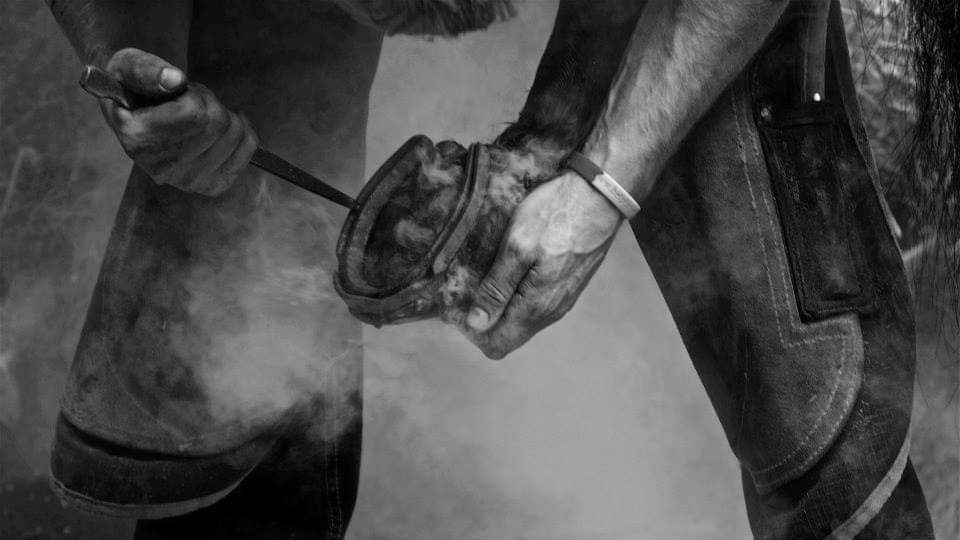 None of this is about abandoning what makes farriery great. The depth of training. The years of hands-on knowledge. The ability to read a foot, shape a shoe, and understand a horse’s movement in ways that no scanner or algorithm can replicate. These strengths are real, they are hard-won, and they matter.
But strengths that go unarticulated are invisible. History that isn’t told becomes irrelevant. Expertise that refuses to adapt becomes a museum piece. The world has changed. Your clients have changed. The market has changed. Technology has changed. The information landscape has changed. And it’s still changing – faster than most of you are comfortable with.
You can resist that. You can complain about it. You can blame the barefoot trimmers, the government, the vets, the horse owners, social media, the younger generation, and anyone else who makes a convenient target. Or you can face it. Adapt. Evolve. Fight for your profession with the same determination you bring to every forge session and every difficult foot.
Stop whining. Get with the programme. And do it now. Because if you don’t, someone else will fill the space you’ve left. And they won’t ask your permission. They never have.
The horses still need their feet doing. The question is whether you’ll still be the ones doing it.